
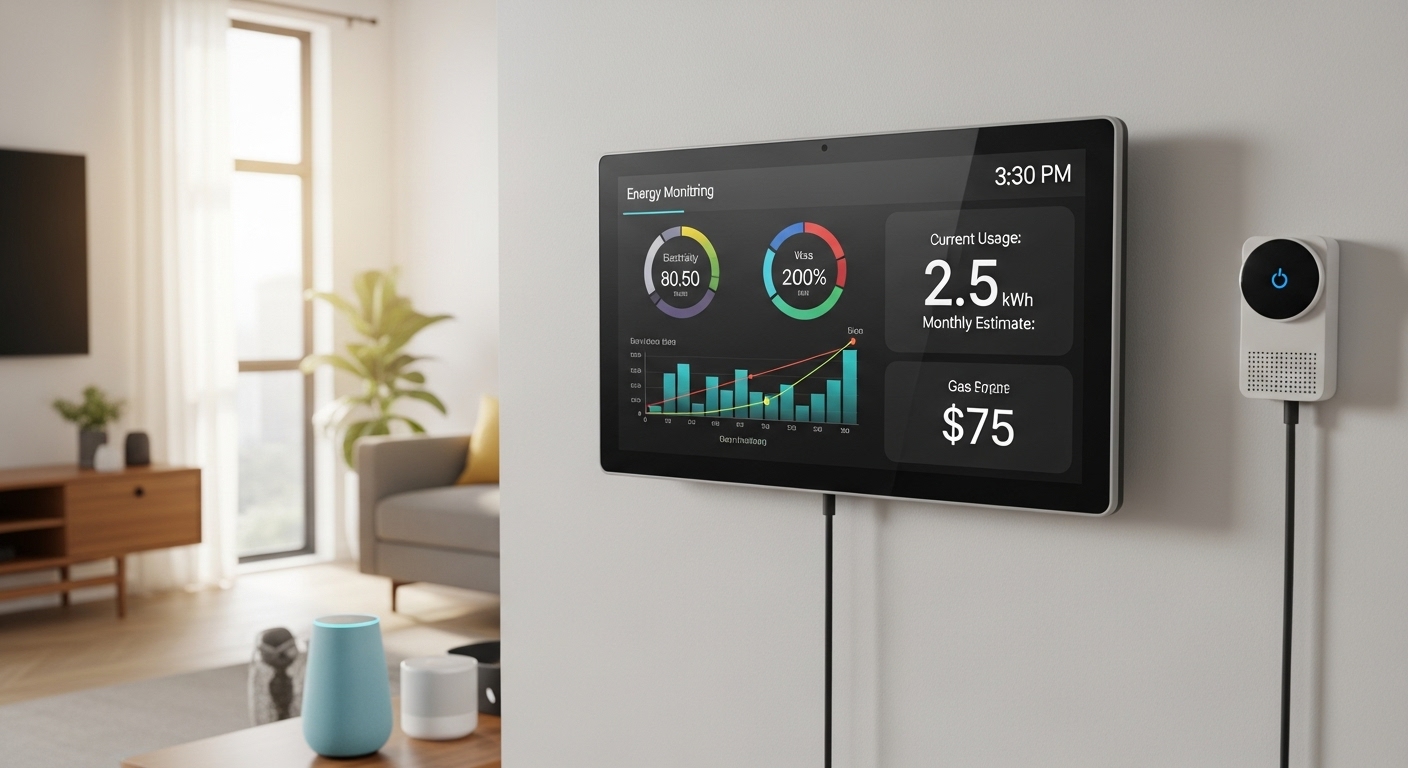

Renting an apartment comes with many hidden costs—chief among them, utility bills. But what if your property could monitor energy use in real time, detect waste, and guide savings? That’s exactly what a strong SaaS energy-monitoring solution can deliver for multifamily buildings.
For landlords, utility bills and common-area energy use often eat into profits. For tenants, not knowing how much energy is being consumed until the end of the month can be frustrating. A modern software-as-a-service (SaaS) energy monitoring platform helps both sides: it provides transparency, encourages efficiency, and lowers costs.
In this article, we’ll walk through how to choose the best SaaS energy-monitoring for apartments, the features that matter, top platforms, and a step-by-step roadmap for implementation.



Table of content
- Why Use SaaS Energy-Monitoring in Apartments?
- Visibility & Accountability
- Cost Reduction & ROI
- Tenant Engagement & Fair Billing
- Predictive Maintenance
- Sustainability & Compliance
- Key Criteria for Choosing the Best SaaS Energy-Monitoring
- Top SaaS Energy-Monitoring Platforms for Apartments
- 1. EnergyCAP Smart Analytics
- 2. Intellimeter i-meter®
- 3. Hark Energy Platform
- 4. E360 by SanaLife Energy
- Implementation Steps & Best Practices
- Common FAQs
- Practical Benefits for Landlords and Tenants
- Conclusion
Why Use SaaS Energy-Monitoring in Apartments?
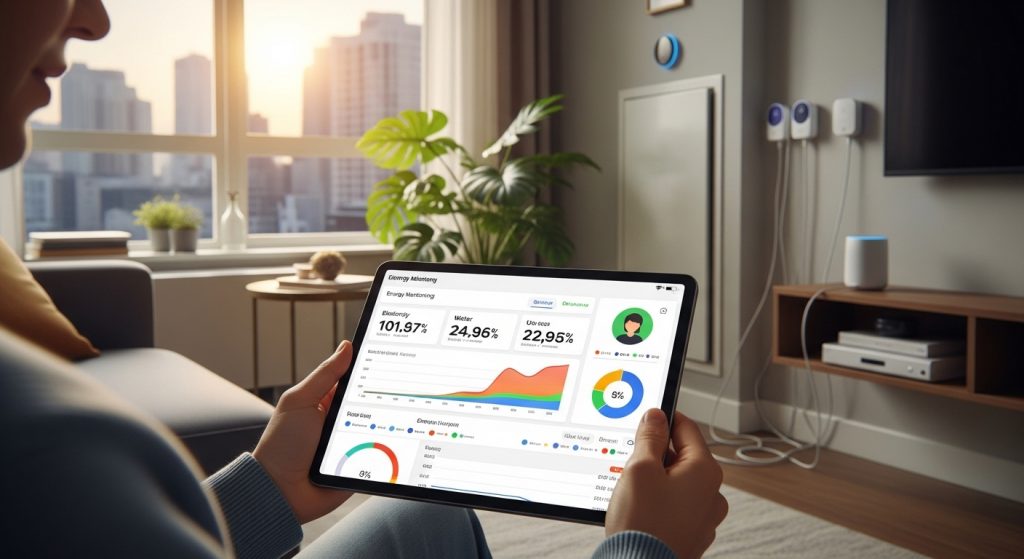
Energy use in multifamily housing is notoriously difficult to track. A single property can have dozens of tenants, each with unique consumption patterns. Without proper monitoring, costs escalate quickly. SaaS energy-monitoring helps in the following ways:
Visibility & Accountability
Traditional monthly utility bills only show the total. SaaS solutions provide real-time or near-real-time data, often down to the apartment, room, or appliance level. This makes it easier to identify wasteful habits, malfunctioning equipment, or unnecessary energy spikes.
Cost Reduction & ROI
Most energy-monitoring platforms help buildings cut 5–15% of utility costs by eliminating inefficiencies like HVAC units running when unoccupied or excessive lighting in common areas. Even modest improvements quickly cover the subscription fees.
Tenant Engagement & Fair Billing
When tenants see their own consumption through an app or portal, they’re more likely to reduce waste. Sub-metering combined with SaaS monitoring also ensures fair billing—each resident pays for their own usage rather than splitting costs unevenly.
Predictive Maintenance
Systems can detect unusual energy patterns that often signal failing equipment. For example, a water pump drawing more current than usual might indicate wear. Alerts allow property managers to schedule maintenance before breakdowns occur.
Sustainability & Compliance
Energy transparency supports sustainability goals, carbon reporting, and green certifications. Property owners can also use data to meet evolving government regulations around efficiency standards.
Key Criteria for Choosing the Best SaaS Energy-Monitoring
When comparing vendors, landlords and managers should look beyond flashy dashboards. The following criteria ensure a system that delivers long-term value:
| Criteria | Why It Matters | What to Look For |
|---|---|---|
| Granularity & Sub-metering | Apartment-level data prevents disputes and promotes fairness | Ability to track multiple units and devices |
| Integration / APIs | Smooth integration reduces IT headaches | Open APIs and compatibility with BMS or IoT devices |
| Real-Time Updates | Fast detection saves money | Data refresh in minutes, not days |
| Analytics & Alerts | Insight matters more than raw numbers | Forecasting, anomaly detection, trend reports |
| Ease of Deployment | Lower upfront costs and faster ROI | Wireless sensors, plug-and-play hardware |
| Scalability | Growing portfolios need flexible systems | Multi-building dashboards and rollups |
| Tenant Access | Engagement drives behavioral change | Mobile apps, role-based permissions |
| Cost Model | SaaS can add up | Clear subscription tiers and transparent hardware fees |
Top SaaS Energy-Monitoring Platforms for Apartments
Below are several leading options that stand out in the multifamily sector:
1. EnergyCAP Smart Analytics
Perfect for large apartment portfolios, EnergyCAP Smart Analytics brings all your utility bills and real-time energy data into one centralized hub. This means property managers can track usage trends across multiple buildings, identify waste, and streamline reporting.
Why it stands out:
- Robust analytics tools for deep insights.
- Simplifies energy audits and compliance.
- Helps identify cost-saving opportunities across a big portfolio.
Tip: Best suited for larger complexes where advanced reporting and detailed benchmarking are key. Smaller properties might find the setup a bit heavy.
- Mature solution
- Excellent analytics
- Heavier configuration
- Best for larger complexes
2. Intellimeter i-meter®
Designed specifically for sub-metering, i-meter® gives both landlords and tenants access to detailed, real-time dashboards. This transparency encourages residents to be more energy-conscious while helping property managers allocate costs more fairly.
Why it stands out:
- Tenant-level reporting for precise accountability.
- Scalable design that grows with your property.
- Promotes tenant engagement through data visibility.
Tip: To unlock its full potential, make sure your property has compatible meters installed. Once set up, it’s a powerful tool for improving efficiency and tenant relationships.
- Tenant-level reporting
- Scalable design
- Requires compatible meters for full functionality
3. Hark Energy Platform
Hark is all about flexibility and ease of integration. Its real-time monitoring tools and vendor-agnostic design make it especially valuable for retrofitting older properties without replacing existing systems.
Why it stands out:
- Seamless integration with a wide range of devices.
- Provides actionable insights in real time.
- Perfect for properties looking to modernize without massive upfront costs.
Tip: While advanced features may add extra costs, the long-term efficiency gains often justify the investment. It’s a smart choice for property owners who want to future-proof their energy management.
- Flexible
- Integration-friendly
- Advanced features may come at an added cost
4. E360 by SanaLife Energy

E360 is a fresh, modern SaaS platform that combines automation, reporting, and optimization tools in a single solution. It’s designed to simplify energy management across multiple properties, making it especially appealing for growing portfolios.
Why it stands out:
- Automation reduces manual work for property managers.
- Built-in reporting tools make data easy to understand.
- Scales well for multifamily portfolios.
Tip: As a newer solution, it’s still maturing in some markets—but that also means it’s evolving fast with modern features and user-friendly design.
- Portfolio-friendly
- Automation built-in
- Newer product
- Still maturing in some markets
Implementation Steps & Best Practices
| Step | Action | Description |
|---|---|---|
| 1 | Start with a Pilot | Select one building, floor, or common area and measure results before scaling to the entire portfolio. |
| 2 | Establish Baselines | Track several weeks of energy use to identify what “normal” looks like, allowing alerts and savings to be more accurate. |
| 3 | Involve Tenants Early | Share dashboards or monthly summaries, and encourage small changes like unplugging devices or moderating HVAC use. |
| 4 | Use Predictive Features | Once enough data is collected, leverage forecasting to avoid peak charges and identify maintenance needs. |
| 5 | Train Staff | Ensure property managers and maintenance staff understand how to interpret data and act on alerts. |
| 6 | Expand & Scale | After proving ROI in the pilot, gradually deploy the solution across the entire property portfolio. |
Common FAQs
Q: Can these systems be installed in older buildings?
Yes. Many solutions offer wireless sensors and retrofit kits that avoid heavy rewiring.
Q: Who pays for the system?
Typically, landlords invest in the SaaS subscription. Some recover costs by billing tenants fairly based on actual usage.
Q: Will this guarantee savings?
No tool guarantees savings. The platform provides insights—the savings come from acting on those insights.
Q: How secure is the data?
Most platforms use encrypted communication, secure cloud storage, and role-based permissions to protect tenant data.
Practical Benefits for Landlords and Tenants
For Landlords
- Reduced operational expenses
- Easier reporting for compliance
- Higher property value from green certifications
- Better tenant satisfaction through transparent billing
For Tenants
- Awareness of personal consumption
- Ability to cut bills by adjusting behavior
- Assurance of fair cost distribution
- Contribution to sustainability goals
Conclusion
The best SaaS energy-monitoring for apartments balances advanced features with ease of use. Landlords gain cost savings, compliance support, and happier tenants, while residents enjoy transparency and fair billing.
If you’re just getting started, pilot a small deployment, monitor results, and then scale across your properties. With the right SaaS platform, you’re not only cutting costs—you’re building a more sustainable, efficient, and tenant-friendly future.
The responses below are not provided, commissioned, reviewed, approved, or otherwise endorsed by any financial entity or advertiser. It is not the advertiser’s responsibility to ensure all posts and/or questions are answered.